

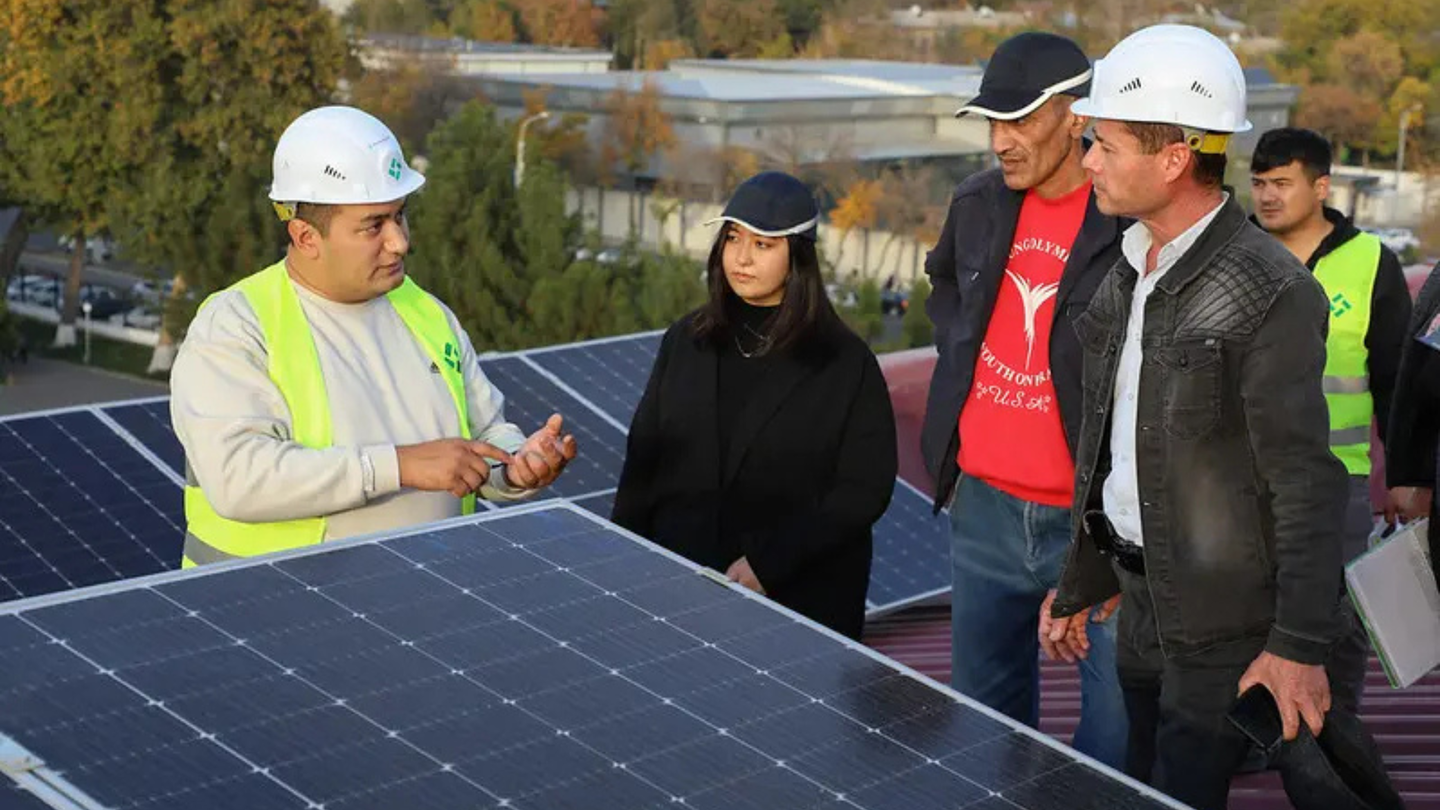

As Uzbekistan pushes toward a greener energy landscape, the government has introduced several key regulations in 2025 and early 2026 to promote solar panel adoption, ensure quality, and integrate renewables into everyday infrastructure. These measures reflect the country’s ambitious goals to increase renewable energy’s share from 16% to 26% by the end of 2025 and 54% by 2030. With abundant sunlight and growing energy needs, these policies aim to make solar power a staple for homes, businesses, and new developments.
One major regulation took effect on June 1, 2025: All new and renovated buildings, regardless of funding source, must install solar panels, solar water heaters, and heat pumps. This mandate also requires energy-efficient features like external heat insulation and closed-loop heating systems to boost overall efficiency. Additionally, at least 50% of the roofs on new multi-story buildings must be equipped with solar installations. As part of this, the government planned to equip 250,000 facilities—including 150,000 homes—with solar panels in 2025 alone.
To incentivize adoption, Uzbekistan expanded its solar subsidy program significantly. In 2025, over 35,000 households received subsidies totaling more than UZS 153 billion (about $12.8 million) for installing rooftop solar systems. Owners now earn 1,000 sums per kilowatt-hour (kWh) of excess energy sold back to the grid, providing a strong financial motivator. This builds on the 2019 Law on the Use of Renewable Energy Sources, which laid the foundation for such incentives.
Quality control has also been tightened. Starting January 1, 2025, imports of solar panels, inverters, and energy storage systems are restricted to manufacturers on the Bloomberg New Energy Finance (BNEF) Tier-1 list. The Ministry of Energy and Customs Committee update this list monthly, ensuring only high-quality, reliable products enter the market.
On a larger scale, the government launched 42 new renewable projects worth €9.46 billion in late 2025, including 16 solar and wind plants adding 3,500 MW of capacity. This supports Uzbekistan’s target of 2,800 MW solar capacity by 2026. Projects like the 126 MW Sarimay solar plant, which began operations in 2025, exemplify public-private partnerships driving this growth.
These regulations not only accelerate Uzbekistan’s clean energy transition but also create opportunities for local businesses in installation and maintenance. However, challenges like enforcement and supply chain adjustments remain. Overall, they position Uzbekistan as a regional leader in solar innovation.